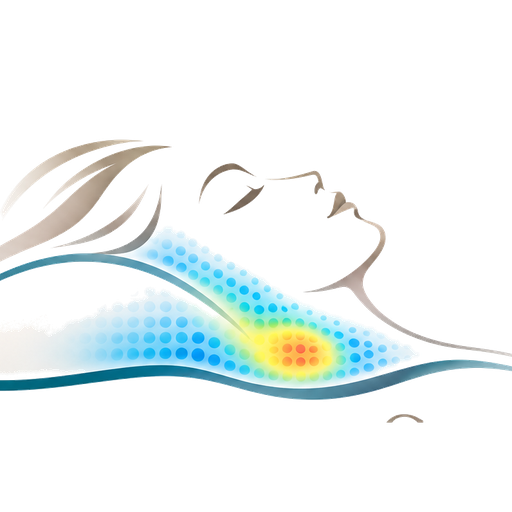
Pillow Mapping™ explained
What Is Pillow Mapping?
How it works in four steps
- 01
You lie on a table with the pillow you normally use.
- 02
A pressure-sensing mat under the pillow records how your head and neck load it.
- 03
A laptop shows the map in seconds. The session takes about five minutes.
- 04
You can compare pillows and positions, and take your personal report with you.
Why people try it
Most of us choose a pillow by feel and never see what it's doing for eight hours a night. A pressure map turns "it feels a bit off" into a picture you can look at and compare. People often use it to:
- compare two pillows side by side;
- see how a change in pillow height or support shows up on the map;
- compare back and side sleeping positions;
- bring something concrete to a conversation with their care team or an advisor.
What Pillow Mapping is not
Pillow Mapping is not a medical test. It doesn't diagnose a condition, explain pain, or predict outcomes. It shows contact and pressure patterns from a mat, and those readings are raw and uncalibrated, so we compare patterns, not absolute pressure. Learn what a pressure map can and can't show.
Where it happens
Scans are done in person at events. See Pillow Mapping in Charlotte and the Carolinas. To bring Pillow Mapping to your workplace or community, see host an event.
Who is behind it
Pillow Mapping is a Sanctuary Sleep Co. offering, founded by Danielle Canter.
Developed through real-world pillow mapping
Built from real sessions, not theory.
Pillow Mapping™ at Sanctuary Sleep Co. was developed by founder Danielle Canter as a practical way to visualize something that is normally difficult to see: how a person's head and neck actually interact with their pillow.
Through individual mapping sessions, Danielle began observing recurring differences in contact patterns based on sleep position, pillow construction, mattress surface and changes in support.
Pillow Mapping does not diagnose a medical condition or determine a "correct" pillow from pressure numbers. The map provides a visual reference. Adjustments can then be compared while the person determines what feels most comfortable and supportive.